
Overview and Context
This project’s goal is to understand and state the relationship between the disciplines of digital humanities and film studies. To do this, several projects and tools are analyzed to connect the two fields. This project is the first required by the DHM280 class of Spring 2022.
Discipline: Film Studies

Film Studies is a discipline that looks at important human cultural artifacts and uses them to understand human culture. This discipline is not as concerned with advancing proficiency in film production. It is more concerned with “exploring the narrative, cultural, artistic, political, and economic implications of the film industry” (Wikipedia). This field is unique in that it is both film centric and writing specific. The main object of study in this discipline is that by studying the films at the theaters or at home produces papers and critiques about films by those who take part in the Film Studies discipline.
Project
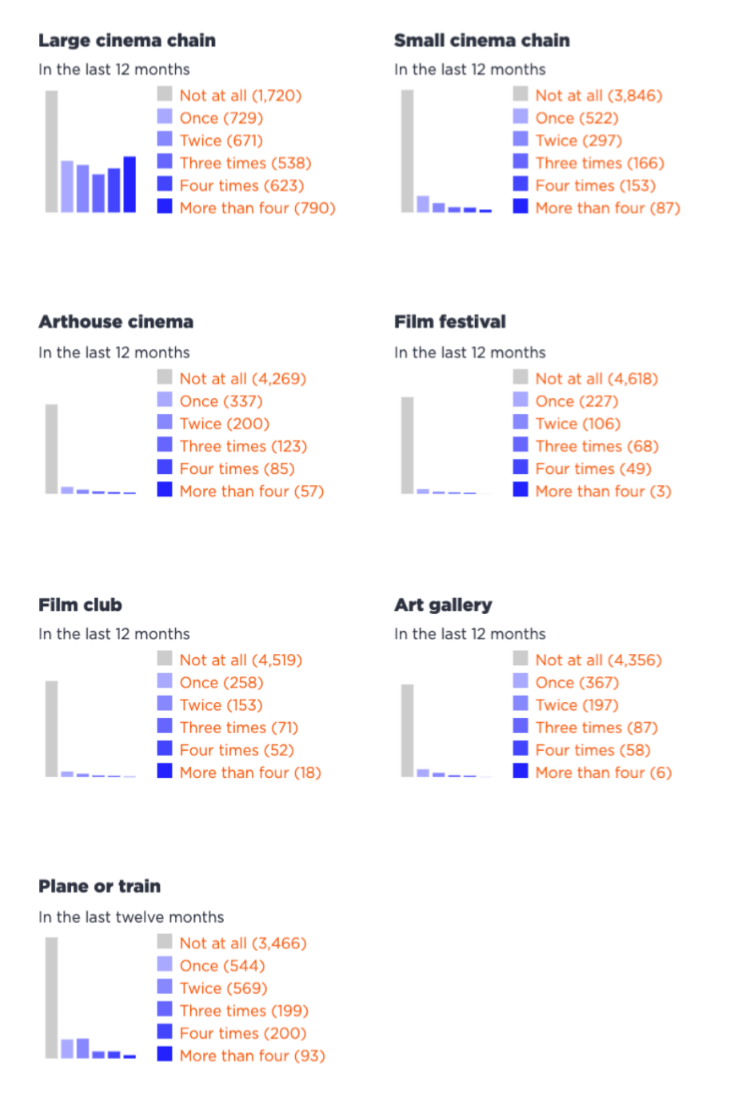
Beyond the Multiplex was a four year project that took place between 2017-2021 and examined how film audiences form and experience around specialized and mainstream films. The project was used to develop a better understanding how a wider range of people might be enabled into participating in a more diverse film culture. In the project they have divided people up into five groups to understand what characteristics each person might have and how they like to watch films. Certain groups of people prefer certain types to film due to their geography, education, and income and they naturally tend to be grouped with those in similar situations as them within the four English regions of Europe the North, South, East, and West. However, Socio-cultural backgrounds such as age, demographic and culture don’t fully determine their preference in film, as some people who enjoy popular films may also enjoy less popular film genres like art house and foreign language films. This project also studies the age ranges of people and how they like to watch films such as people in the 18-24 range tend to enjoy group viewing over individual viewing while the older 55+ age group tends to like watching movies in a non-group setting. This project relates to digital humanities by evaluating groups of people using technology to study what types of films they like as well as introduce them to new understandings of less popular arts and foreign films. This project was led by the University of Glasgow and supported by the University of York, University of Liverpool, and University of Sheffield and was funded by the Arts & Humanities Research Council.
Tools
NVivo
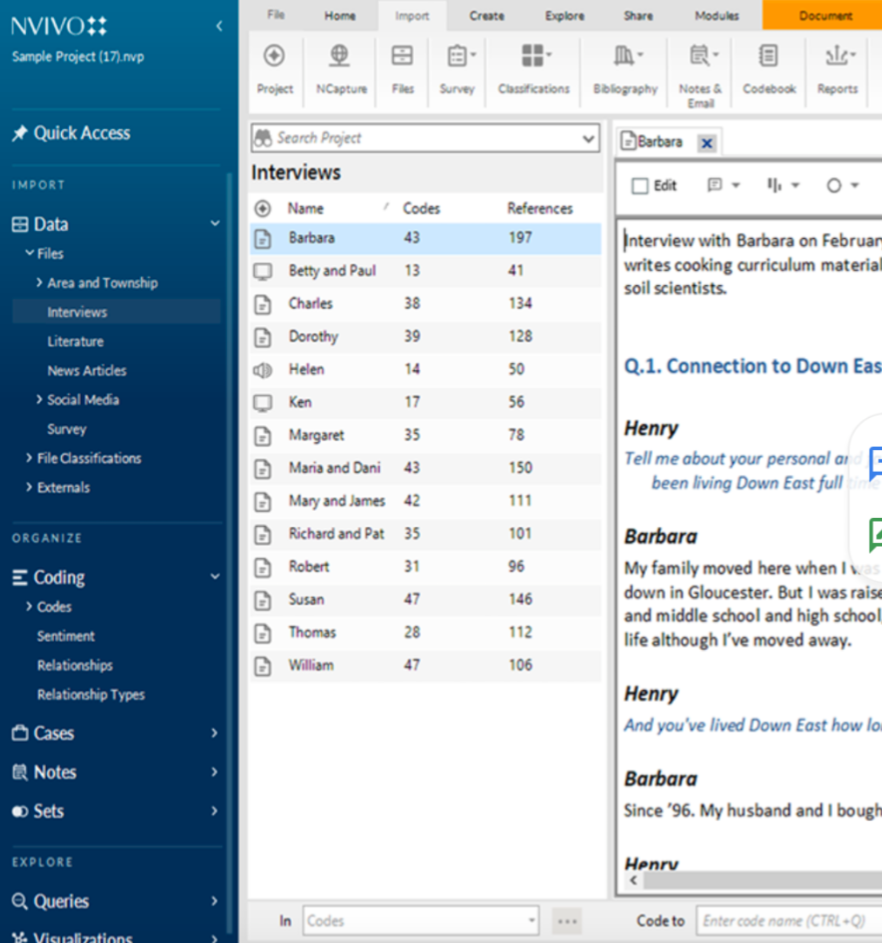
NVivo is a software that compiles and organizes unstructured data so researchers can analyze and visualize it. Developed by QSR International, NVivo runs on Mac or Windows, and uses transcription and collaboration to collect data. The data this software can compile comes from audio, video, online surveys, social media, emails, and images. This tool is specifically used in Beyond the Multiplex to compile surveys and audience reactions to the movies they have seen. The one problem with this software is that it does cost money to use. This does not fully align with the values of digital humanities, but the software is so widespread and is one of the most well recognized data compilers on the market. The company does offer a student discount and different tiers of pricing for the various industries that use it. 
Leaflet
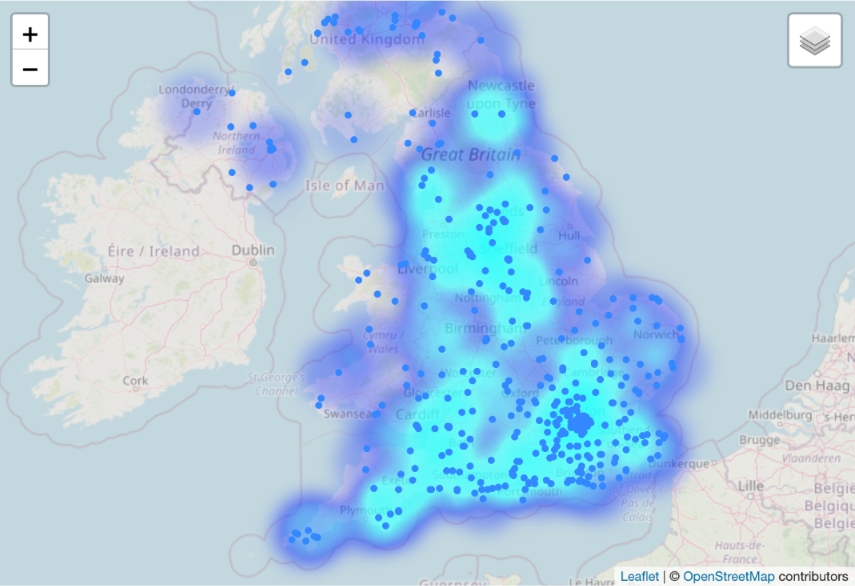
Leaflet JS is a free and open-source collaborative mapping software that can be embedded into any webpage. It is used by major websites such as NPR, Evernote, Facebook, and official government pages to display maps related to stories and posts. Written in JavaScript, it is user friendly and allows data entry to create marked maps and interactive pop ups as well. The data used in our project is based on the movie theater location range of where users saw movies that are not mainstream. The values of this tool align with digital humanities because it is completely free to use. However, the software is not perfect. It is a requirement to be familiar with coding and programming to be adept at this software. It is also a clunky program and even the basics are difficult to get used to.
Goals
The Film Studies discipline tries to create new knowledge in a way that analyzes and shares cultural data as well as developing an approach toward advancing the styles, themes, and forms in films from a critical perspective. They also want to figure out the film’s role in culture and society. To further these goals, the film project aims to understand the relationship between individual background and film preference through the use of group studies. In particular, the project, Beyond the Multiplex, uses tools such as Nvivo and Leaflet. Nvivo is a software tool that organizes unstructured data that can analyze and create readable data. Leaflet is an open-source mapping software that is embedded into any webpage and it mainly displays maps which can be great to use for Film Studies to map out locations of movie theaters.

Values
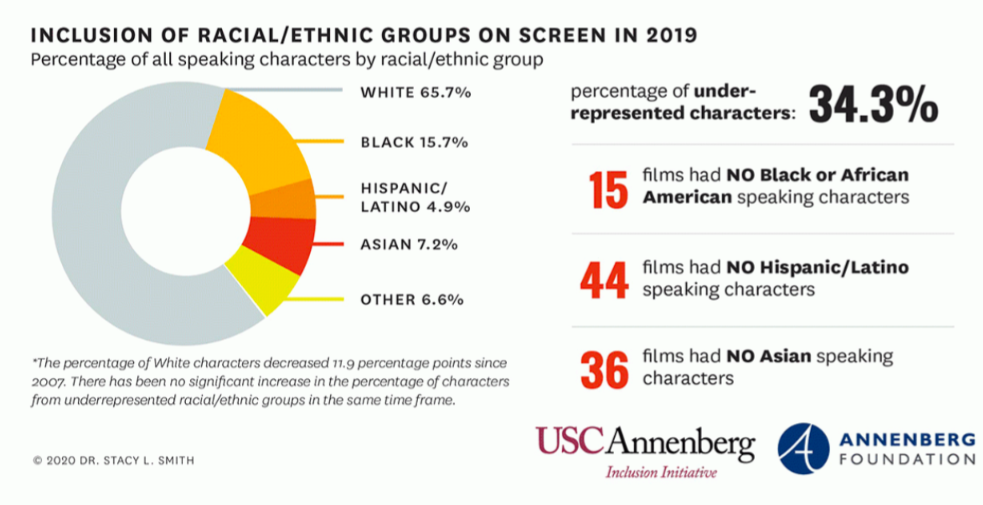
The values of film studies and Digital Humanities reflect and overlap with the value of diversity. Film studies allows for visualization and greater understanding of diversity amongst peoples film preferences based on where they are located. Digital humanities directly relates to this theme of diversity by allowing people to understand human behavior through society’s cultural preferences and decisions. Furthermore, the value of diversity directly connects these two things because both of their core purposes is to show and explain the diversification of data and the way people think and behave.
Peer Reviewed Scholarship
Franklin, Michael, et al. “Innovation in the Application of Digital Tools for Managing Uncertainty: The Case of UK Independent Film” Wiley Online Library, 17 Apr. 2013, https://onlinelibrary.wiley.com/doi/pdf/10.1111/caim.12029.
“This research investigates innovation in how film producers use social digital tools to engage consumers, reduce demand uncertainty, and respond to the challenge of digital disruption that affects the traditional film value chain. Through three empirical case studies of film production and exploitation, we examine examples of innovation in product, service, distribution, marketing and process, each having important implications at the organizational level. Our findings show that innovations in one area have important implications for other areas, distribution impacting on concepts of product and service, for example. We also show that internal firm micro-process dynamics impact directly on external interactions between the firm, consumers en masse and partner firms. Our research thus lies at the nexus of innovation, social media and uncertainty management, and questions the boundaries found in innovation ‘types’ or dominant taxonomies in traditional R&D frames.”
Evaluation and Conclusion
The Film Studies discipline has been around since the 1940s but has only taken shape a decade later in the 1950s. Especially back then, there was no way to accurately assess how films assessed diversity based on race, age, gender, and or location. Eight or so decades have passed since Film Studies took off and the Digital Humanities now has the proper tools to do the things this field could never achieve back then. The tools that are now being used in the Film Studies field offer endless opportunities to evaluate how diversity plays such a huge role in the film industry.

Names
Iain Duncan: WordPress creator

Jessie Walsh: Final report and Discipline
Grant Glick: Tools
Garrett Thompson: Google Slides and Values

Ben Brunke: Google Slides and Projects
