
Madison Ryan, Vivian Phan, Jacki Hagan, Jordan Stata, Bridget Salazar
Our team’s goal for this project is to evaluate the relationship between History and the Digital Humanities through our chosen project and tools. This is a required project assigned to us by Professor Cream in our DHM280 class, during the spring of 2022.
History requires collaborative research and the use of tools to skillfully analyze a point in space and time. Digital Humanities helps us to understand history better through projects made by historians in an effort to encourage readers to want to learn about past events and understand them. The project our team chose, ‘Dharma and Punya’, was created by multiple people using digital artifacts and databases.
Home
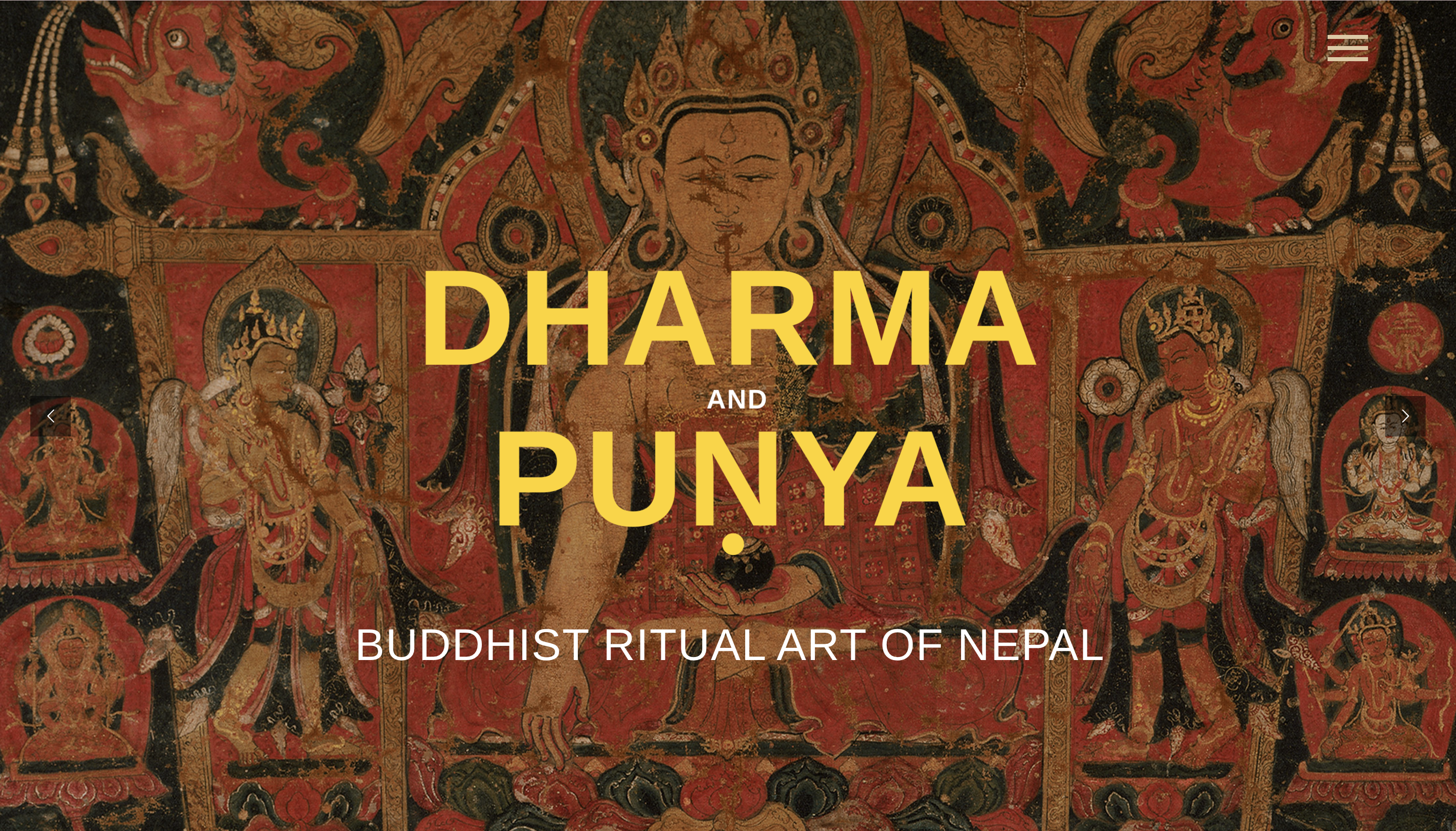
This Project highlights Nepal’s artistic heritage as a rich and enduring continuation of India Buddhist traditions. The data was organized using many tools designed for digital humanities and with the value of collaboration.
Dharma and Buddha – Buddhist Ritual Art of Nepal
Ritual was, and is, a very important part of Buddhism. This project features ritual implements as well as artifacts such as paintings, texts, sculptures created over the last millennium. All these artifacts describe the importance of ritual within this religion. Within this project is a historic exhibition of contributions of Kathmandu Valley artisans through the development of Tibetan Art.
Tool
Neatline is a tool commonly used for projects focused on historical events.
This tool makes it easier to create a timeline as it guides you through the process of making your own, whether it’s from ancient history or in the future. People are able to create and share timelines that help people understand and contextualize history, as well as interact with the timeline. Neatline makes collaborating with others easy and effective. The importance of this tool in Digital Humanities is that it provides a visual for others to see what events happened at what specific time.

Values
Collaboration is a value of much importance in the field of history. Historians have recorded events of the past, either in writing or by passing on an oral tradition, and have attempted to answer historical questions through the study of written documents and oral accounts. From the beginning, historians have also used such sources as monuments, inscriptions, and pictures. Collaboration is heavily involved because it is common for historians to work together on research, use each other’s research to build off of, and study certain artifacts that were founded by other people. We would not know the past if people worked alone to understand it.
Digital humanities also relies on collaborative efforts to make projects possible. Our chosen project was not built by one person. There are multiple curators, sponsors, and lenders involved that made this project possible. Digital humanities is not reliable or useful without collaboration and different perspectives.

Goals
The project was made to inform and help others understand the Buddhist ritual art of Nepal. Digital Humanities plays a role as the project provides a variety of different topics to learn about, such as the different ritual objects that are made and the common rituals that are practiced. The group members in this project even included events that you could attend to learn more about the different art and rituals that were made and practiced.
