Overview
In DHM 280, Fall 2022, we were given an assignment asking us to relate a discipline to digital humanities to establish the potential for interdisciplinary collaboration. Our group chose the discipline of musicology to explore and research.

Musicology
Musicology is the scholarly analysis and research-based study of music. Musicology traditionally is divided into three main branches: historical musicology, systematic musicology, and ethnomusicology (Wikipedia).
Historical Musicology
This branch of musicology examines composition, performance, reception, and criticism over time (Wikipedia).
Systematic Musicology
This branch explores the foundations of music from different points of view, such as acoustics, physiology, psychology, anthropology, music theory, sociology, and aesthetics (Wikipedia).
Ethnomusicology
This branch is the study of music in its cultural context. This field can include anthropological and sociological perspectives (Wikipedia).


Musicology encompasses all aspects of music in all cultures and all historical periods (American Musicological Society). Musicology differs from the discipline of music theory because musicology focuses on the physical analysis and reading of music whereas music theory studies music aurally from elements like chord structure, melody, and time signature. Musicologists research music making cultural and historical connections from different musics’ characteristics. They do not publish rearrangements with uniform notation but rather scholarly articles of their observation and analysis. Musicology is crucial to culture because studying music explains aspects of culture such as language, celebration, and fashion. Musicology provides an explanation for how music unites different cultural groups in unique but similar ways.
Music21
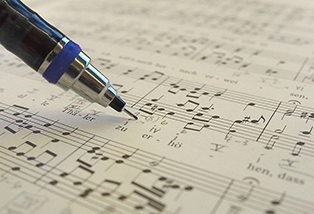
Music21 is a digital software for computer-aided musicology. This software builds upon previously existing technology to help answer questions related to music with computational methodologies. Music21 uses Python to digitally analyze music scores through coding commands that allow the user to display their analysis such as chord structures and key signature.

Python
Python is an interpreted, object-oriented, high-level programming language with dynamic semantics. Its high-level built in data structures, combined with dynamic typing and dynamic binding, make it very attractive for Rapid Application Development, as well as for use as a scripting or glue language to connect existing components together. Python’s simple, easy to learn syntax emphasizes readability and therefore reduces the cost of program maintenance. Python supports modules and packages, which encourages program modularity and code reuse. The Python interpreter and the extensive standard library are available in source or binary form without charge for all major platforms, and can be freely distributed (Python).

Goals
Music21 aims to provide cultural and historical data from musical analysis created by digital software. This aids musicologists in their studies by allowing them to quickly perform detailed analysis of a musical piece. Music21 enhances musicology by producing a broader understanding of how music and culture developed over time. This software allows musicologists to compare relevant analytical data between musical pieces to make observations and conclusions about music’s influence on culture and society. Musicology then aids the digital humanities by explaining literature, history, and philosophy. Music21’s overall goal is to make musicology easier and faster than it was before through the utilization of technology.

Values
One value of Music21 is transparency. Music21 can be downloaded through GitHub with the assets used being credited on the bottom of the release page. Even the update changes are listed. Musicology also values transparency, as it can be assumed that Musicologists give credit to the work that they used from others. Just as transparency has big value to Musicology, it also has that to the digital humanities. They both think that data sources and methods must be revealed and shared (DH Intro slides).

Scholarship
The Digital Music Lab: A Big Data Infrastructure for Digital Musicology
Abdallah, S., Benetos, E., Gold, N., Hargreaves, S., Weyde, T., & Wolff, D. (2017). The Digital Music Lab. Journal on Computing and Cultural Heritage, 10(1), 1–21. https://doi.org/10.1145/2983918
Abstract
In musicology and music research generally, the increasing availability of digital music, storage capacities, and computing power enable and require new and intelligent systems. In the transition from traditional to digital musicology, many techniques and tools have been developed for the analysis of individual pieces of music, but large-scale music data that are increasingly becoming available require research methods and systems that work on the collection-level and at scale. Although many relevant algorithms have been developed during the past 15 years of research in Music Information Retrieval, an integrated system that supports large-scale digital musicology research has so far been lacking.
In the Digital Music Lab (DML) project, a collaboration among music librarians, musicologists, computer scientists, and human-computer interface specialists, the DML software system has been developed that fills this gap by providing intelligent large-scale music analysis with a user-friendly interactive interface supporting musicologists in their exploration and enquiry. The DML system empowers musicologists by addressing several challenges: distributed processing of audio and other music data, management of the data analysis process and results, remote analysis of data under copyright, logical inference on the extracted information and metadata, and visual web-based interfaces for exploring and querying the music collections. The DML system is scalable and based on Semantic Web technology and integrates into Linked Data with the vision of a distributed system that enables music research across archives, libraries, and other providers of music data. A first DML system prototype has been set up in collaboration with the British Library and I Like Music Ltd. This system has been used to analyze a diverse corpus of currently 250,000 music tracks. In this article, we describe the DML system requirements, design, architecture, components, and available data sources, explaining their interaction. We report use cases and applications with initial evaluations of the proposed system.

Evaluation and Conclusion
Interdisciplinary collaboration is profitable since musicology has various branches. Historical musicologists mostly study the history of the western classical music tradition, though the study of music history need not be limited to that. Ethnomusicologists draw from anthropology (particularly field research) to understand how and why people make music. Systematic musicology includes music theory, aesthetics, pedagogy, musical acoustics, the science and technology of musical instruments, and the musical implications of physiology, psychology, sociology, philosophy and computing. Cognitive musicology is the set of phenomena surrounding the cognitive modeling of music. When musicologists carry out research using computers, their research often falls under the field of computational musicology. Music therapy is a specialized form of applied musicology which is sometimes considered more closely affiliated with health fields, and other times regarded as part of musicology proper (Wikipedia).


Johnson Hall
Seth Musser built the webpage and wrote the description and project sections. Scott Stahmer served as the project coordinator and created the slideshow presentation in addition to writing the conclusion section. Thomas Pellegrino wrote the tools, goals, and values sections. Evan Werley wrote the project report as well as the project overview and finding scholarship for our discipline.